Showing posts with label History & Politics. Show all posts

Thursday, March 9, 2023

Women's History Month at Daemen!


March is Women’s History Month! Please join the Women's Studies Program at Daemen to celebrate and explore issues in women's history.


Suffragetto!  

Tuesday, March 21

11:30 am to 1:00 pm, Alumni Lounge


This recently rediscovered historic board game (from 1909) is based upon British suffragettes’ battle for women’s right to vote. Suffragetto is a strategy game played by two players; suffragettes try to break into Parliament’s House of Commons and confront police who are trying to disrupt a suffrage meeting in Albert Hall while protecting the House of Commons from the invading women. Learn about movements to secure the right to vote while playing this historic game. Co-sponsored by Daemen’s Women’s Studies Program and the Center for Diversity & Inclusion. Refreshments are included. 


“Hidden Figures”  

Thursday, March 23 

4:00 to 7:00 pm, RIC120


The 2016 film, headlined by Octavia Spencer, Taraji P. Henson, and Janelle Monae, traces the stories of three Black female mathematicians, human “computers” whose work for NASA was integral to the success of the US space program. After the film, Dr. Intisar Hibschweiller (Professor of Mathematics) and Dr. Diane Ramos (Chair of Natural Science Department) will discuss women’s role in STEM fields, including challenges and opportunities for women today. Co-sponsored by Daemen’s Women’s Studies Program and the Center for Diversity & Inclusion. Refreshments are included. 


“Gendered Norms and Women's Access to the Law in Rural Bangladesh” 

Wednesday, March 29

1:25-2:20pm, DS336 

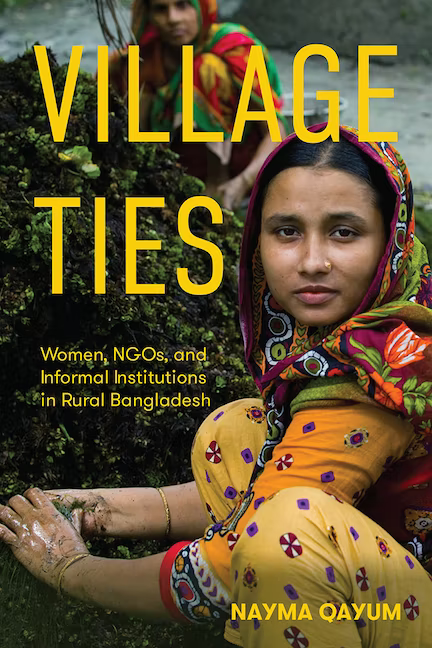
Lecture by Dr. Nayma Qayum, the author of Village Ties: Women, NGOs, and Informal Institutions in Rural Bangladesh. Qayum will explain how rural Bangladeshi women seek to end practices such as child marriage, dowry abuse, and intimate partner violence, which persist although they have been outlawed. Qayum is an Associate Professor of Political Science and Global and International Studies at Manhattanville College. This event, part of the History & Politics Event Series, is also co-sponsored by Daemen’s Global Studies program, Women’s Studies program, and the Center for Diversity & Inclusion. 


“Gaslight” 

Friday, March 31

5:00-7:30 pm, RIC120

Are you curious about “gaslighting,” Merriam-Webster’s 2022 Word of the Year? In this classic 1944 thriller, Ingrid Bergman plays a newlywed whose husband manipulates her into distrusting her own experiences, perceptions, and memories (“gaslighting” her). Come for the film and stay for the discussion, with commentary and discussion led by Dr. Shirley Peterson, emeritus Professor of English. Co-sponsored by Daemen’s Women’s Studies Program and the Center for Diversity & Inclusion. Refreshments are included. 


**All events are free and open to the public. Please contact Dr. Penny Messinger, director of the Women's Studies Program, for more information** 


Friday, November 8, 2019

"The 25th Anniversary of the Rwandan Genocide," by Dr. Aimable Twagilimana

Dr. Aimable Twagilimana, Professor of English at Buffalo State College, delivered a lecture on the 25th anniversary of the genocide against the Tutsi ethnic group at Daemen College on November 7, 2019. The event was co-sponsored by the History & Political Science Department's History & Politics Event Series, together with Daemen's Black Student Union and African Student Organization. Dr. Joseph Sahr Sankoh, Associate Professor of Political Science, coordinated the event. 


Daemen students and community members listen to Twagilimana's lecture (source: WBFO)

 Emphasizing that "words can kill," Twagilimana noted that genocide does not "just happen," but grows from a longer process of othering a particular race or ethnic group, including the use of language that dehumanizes a target population. WBFO radio reporter Mike Desmond filed a story about Twagilimana's lecture, linked here.

Wednesday, March 6, 2019

Women's History Month -- 2019!

The Women's Studies Program at Daemen is proud to announce this year's Women's History Month roster of events, including lectures, films, a poetry reading, and a meet-and-greet poster-making session.

(Scroll down to the Women's History Month poster for full details about each event.)

 
"Liberty" (Frances F. Noyes) presides over this March 31, 1913, suffrage parade in Washington, D.C., as women sought the right to vote. (National Archives)


Lectures: The History and Political Science Department is sponsoring two lectures as part of its History & Politics Event Series:
  • On March 25 (7pm, RIC120), Dr. Alexis Henshaw will speak on "Insurgent Women: Female Combatants in Civil Wars." Dr. Henshaw is a political scientist specializing in international women's issues. She is a professor as well as United Nation consultant. Henshaw's lecture will draw upon her recent book, Insurgent Women, to explore women's involvement in war and peace efforts in several regions: Ukraine, Kurdish groups in the Middle East, and the civil war in Columbia. (For more information, see the event flier or our Facebook event page)
  • On March 20 (7pm, Wick Social Room), Dr. Karolina Krasuska will present a lecture on "Women and the Holocaust." Dr. Krasuska, an Assistant Professor at the University of Warsaw, Poland, is an expert on transnational modernism, gender, queer identity, and Jewishness. In fall 2017, Krasuska taught a class on 20th century European history at Daemen during her visit as part of the faculty exchange program between Daemen and the University of Warsaw's American Studies Center.  Her lecture will draw upon her recent coedited collection, Women and the Holocaust: New Perspectives and Challenges. Dr. Krasuska's lecture is co-sponsored by the Center for Polish Studies.
Films: 
  • On March 6 (7pm, Wick Alumni Lounge), the History & Political Science Department is screening the classic 1959 French film, Hiroshima Mon Amour, timed to coincide with the 60th anniversary of the film's release. Dr. Kevin Telford (Associate Professor of French, Modern Languages Department) will comment and lead a discussion after the movie. 
  • On March 27 (7pm, RIC120), the AAUW Student Organization will air the 2016 (remake) of the movie, Ghostbusters, in which paranormal investigators try to prove that ghosts are real. Students will discuss the film through a feminist lens, focusing on the significance of the all-female cast and reframed story.  
  • on March 28 (4pm, DS336), Dr. Shannon Lupien and other members of the Psychological Sciences Department will present The Tale as part of the Daemen Film Series. The Tale explores the aftermath of the sexual assault of a child--from the perspective of the adult survivor of sexual assault who is coming to terms with what happened to her as a child and who needs to understand the stories she told herself to survive her experiences.  
Poetry Reading:
  • On March 20 (7pm, 3rd floor RIC), the Readings at the RIC poetry series features two female poets from Buffalo: Rachelle Toarmino and Theresa Wyatt
AAUW: Sign-design & Interest Meeting:
  • On March 7 (7pm, RIC Den), members of the AAUW Student Organization will come together to make signs and socialize before the 2019 Buffalo Women's March (scheduled for Sunday, March 10). The club promotes gender equality and action in behalf of women's education and gender pay equity. Make a sign, plan for the March, and learn more about the AAUW and its members. 


Upcoming events: Visit this page for updates on April's events:
  • Dr. Laura Watts, Associate Professor of Art History (Visual and Performing Arts Department) -- will lecture on images of the matria in 19th century Italian paintings (Time/location TBA)
  • On April 17 (Academic Festival) the AAUW Student Organization is holding a World Hijab Day Acknowledgement event--and henna booth. Learn about cultural traditions associated with wearing hijab--why do women wear them, and what do they represent? The club will also sponsor a henna booth. Get a henna tattoo and learn about the cultural significance of henna body ornamentation in different cultures. The event is scheduled to run for several hours, but most visitors will want to stay for 15 to 30 minutes so you can stop by between other events at Academic Festival. (schedule will be posted here)
Read more about this year's Women's History Month events in this story from The Daemen Voice and by visiting the History & Political Science Department's Facebook page.

Questions? Contact Dr. Penny Messinger, Associate Professor of History and Director of Daemen's Women's Studies Program.

Wednesday, October 11, 2017

The Thoughtful Coal Miner--"Coal, Climate, and Environmental Backlash" tour--coming to Daemen on October 24

Nick Mullins, a 5th-generation former coal miner and author of The Thoughtful Coal Miner blog, will speak at Daemen College on October 24 as part of his "Coal, Climate, and Environmental Backlash" tour. His talk is sponsored by the History & Political Science Department (History & Politics Event Series), the Department of Modern Languages, the Social Work & Sociology Department, and the Department of Global and Local Sustainability at Daemen College. 

Details: Tuesday, October 24, from 11:30-12:30, in Scheck Hall, room 202, Daemen College (4380 Main Street, Amherst, NY 14226). This event is free & open to the public.

Nick Mullins
Mullins will draw upon his personal history as a former underground coal miner and energy transition advocate to explain the socioeconomic transition currently underway in Appalachia, as the region has shifted from being a bedrock of labor rights into a bastion of political conservatism, rallying around the coal industry's claims of being victimized in a "war on coal." The story in Appalachia is a microcosm of national patterns, where strong environmental advocacy movements have been undermined by the gutting of regulatory agencies charged with protecting public health and safety as well as regulatory capture, with industry officials appointed to positions in the agencies charged with industrial regulation. Meanwhile, scientific studies and enforcement initiatives related to climate change are being defunded, and social justice initiatives undermined.

Mullins arranged the "Coal, Climate, and Environmental Backlash" tour in order to help audiences understand the issues faced by working-class communities, as well as to rebuild stronger relationships among people in different parts of the country. His talk will address a range of topics, including the following:
  • Corporate manipulation of cultural values
  • The backlash in rural communities against environmentalism and liberalism
  • Outside exploitation of Appalachian resources and people
  • The power of the Jobs vs. Environment debate
  • Learning how to communicate across political and cultural lines


For more information about the tour, visit The Thoughtful Coal Miner blog or contact Dr. Penny Messinger.
Sponsored by: the History & Politics Event Series (History & Political Science Department); the Modern Languages Department,the Social Work & Sociology Department, and the Department of Global & Local Sustainability at Daemen College.

Friday, September 22, 2017

Constitution Day: Building Civic Literacy


National Constitution Day and Citizenship Day: Understanding the Importance of Civic Education 

The United States Constitution was signed by the delegates of the constitutional convention on September 17, 1787.  Ratified and put into effect in 1789, it is the oldest, functioning written constitution in the world.  All federal and state officials are required to take an oath to support and defend the U.S. Constitution. To satisfy the requirements for naturalization, all new citizens must pass a citizenship test which tests their knowledge of its contents and the functioning of the U.S. political system.  In 2004, Senator Robert Byrd (WV) sponsored legislation to mandate a National Constitution and Citizenship Day to encourage all citizens to reflect upon and learn about the the foundation of our constitutional system of government. 

Basic civic literacy is arguably the cornerstone of a healthy, functioning democracy. Our system of representative government is predicated upon an active and informed citizenry.  Unfortunately, while the value of civic knowledge receives considerable lip service, the quality of civic education in the United States can be viewed as lacking. A recent survey by the Annenberg Public Policy Center found that only 26% of people could correctly identify all three branches of government; 33% could not name a single one. Americans' low level of political knowledge has been much lamented and is a popular subject for late-night comedy shows which feature respondents who are unable to answer basic questions about political and current events. But the lack of civic knowledge is really no laughing matter.

Inline image 1
For "we the people" to play an active role in shaping the system, laws, and structure of the society in which we live, we must first and foremost understand the system, its rules and processes and the history and events which led to its development. For "we the people" to exercise an informed voice, we must have familiarity with the the range of actors who exercise power in the policy making environment. Knowledge, as they say, is power.  

It is the mission of the History and Political Science Department to promote civic literacy and to empower our students in their role as citizens. To that end, we have honored Constitution Day and Citizenship Day through a broad range of activities, including educational programming, nonpartisan voter registration efforts, and the assessment and promotion of civic knowledge.  This year, student representatives of the Pre-Law Student Association (PLSA) and History and Government Clubs (H&G Club) handed out free copies of the U.S. Constitution, assisted with voter registration, and administered a quiz for students to test their knowledge of the Constitution. 

82 Students took our Constitution Day Quiz. This was a non-random sampling comprised of students who were willing to take a pop-quiz motivated by a free mini-constitution and a chance to win one of three $10 Amazon Gift Cards.


Members of the Pre-Law Student Association (PLSA) and History & Government Club staffed
a Constitution Day Table, assisting with voter registration and handing out
 free mini-constitutions and prizes for students taking the Constitution Day Quiz.

The results of our quiz were somewhat mixed. 

On the basics of separation of powers, 94% of respondents correctly identified the president as the head of the executive branch. Daemen students also did well with recalling specific details (fill-in-the-blank). 73% correctly indicated the length of the term of U.S. Senators is 6 years; 61% correctly identified the number of electoral College votes necessary to win the presidency as 270 and the number of times the Constitution has been amended as 27.  Just over half, however, correctly identified declaration of war as one of the enumerated powers assigned to Congress.

Less than 30% could answer a basic question about the constitutional process of impeachment (specifically, that it is the U.S. Senate which tries impeachment cases).  And almost half (49%) believed that Congress has the authority to revise the constitution by a simple majority vote in both chambers. (In actuality, an amendment requires two-thirds approval by both Houses of Congress followed by ratification by three-fourths of the states--a very demanding threshold).  And only 28% knew that when no candidate receives 270 electoral college votes, the selection of the president falls to the U.S. House of Representatives.  

So while our students were proficient on some of the basics, their understanding of more in-depth constitutional processes was lacking, suggesting that there is more work to be done.

For now, many students left happy with a shiny copy of the U.S. Constitution. And three students were the lucky winners of our raffle: Carly Hardick, Bryon Anglade, and Darcy Paradiso. Congratulations!


Saturday, April 22, 2017

Farida Jalalzai: Why are there so few women in political leadership postitions?


Dr. Farida Jalalzai, the featured speaker for Women’s History Month, presented her research on women, gender, and politics in a March 28th event in the History & Politics Event Series. In her guest blog post below, Brianna Zichettella (junior, PSC), discusses Dr. Jalalzai’s presentation, “The Global Dimensions of Women’s Executive Leadership,” which examined the relationship between gender and political leadership in the international setting.

 Dr. Farida Jalalzai
By Brianna Zichettella (guest blogger)

In the wake of an American presidential election where a woman won the popular vote for the first time in American history, Farida Jalalzai’s research is especially relevant to both domestic and global politics. Her work focuses on the women who occupy and run for executive leadership positions such as prime minister or president. Despite significant increases in female leadership over the last sixty years, gender representation in executive positions is far from equal. According to Jalalzai’s statistics, there have been 144 female executive leaders between 1960, when the first female prime minister was elected, and 2017. Women are more likely to be prime ministers than presidents, but there are still 61% of countries have never had a female leader. Additionally, in 2017, only 6% of executive leaders are women.

There are many different factors that can influence a woman’s chances of becoming an executive leader. Jalalzai cites increased elite control, multi-party political systems, and liberal-leaning government as a few of the factors that tend to result in more female leadership. Regardless of the existence of these structures, many claim that more women do not hold executive leadership positions because women do not run.

Jalalzai disagrees. Her argument is that women run for executive office, but because many voters associate masculine traits with those positions, women are not often elected. For example, it is possible that more women tend to be prime ministers because the position emphasizes cooperation over the top-down hierarchical power structure of a presidency, and the role of a prime minister corresponds more closely with societal expectations for women’s’ behavior.

In addition to this, Jalalzai demonstrated that people tend to support the idea of a qualified female candidate from their party, but if pressed, those same people are more critical of women’s capabilities. Therefore, another reason for why more women are prime ministers could stem from the biases that people bring into the voting booth. Jalalzai’s research indicates that women are more successful in systems that do not choose executives through direct public input, such as prime minister positions that are chosen by a party rather than the voters.

Jalalzai argues that women candidates are often more qualified than their male counterparts. Despite this, they are held to higher standards and face more criticism about their appearance, speaking styles, and whether or not they smile. All three types of judgment can be seen in a lot of the criticism of Hillary Clinton in the 2016 presidential race.

For the American political system, Jalalzai argues that a shift in social opinion will need to occur for a woman to become president. She states that continuing political activism, such as the Women’s March on Washington, is central to illuminating the social, political, and economic inequality faced by women in America today.

Members of the History & Political Science Department faculty pose with guest speaker Farida Jalazai. L-R: Drs Jay Wendland, Aakriti Tandon, Lisa Parshall, Farida Jalazai, Penny Messinger, Elizabeth Campbell, & Andrew Wise. Missing from photo: Joseph Sankoh

Sunday, March 5, 2017

March is Women's History Month

Daemen marks its first decade of celebrating women's role in history

Image from the National Women's History Project  
http://www.nwhp.org/womens-history-month/womens-history-month-history/


Monday, February 27
4:30-6:30pm, Alumni Lounge, Wick Center
Chisholm '72: Unbought and Unbossed
    This 2005 documentary focuses upon Shirley Chisholm's 1972 Presidential campaign. Chisholm was the first black woman elected to Congress and a catalyst for change. Her 1972 presidential campaign confronted racism, sexism, poverty, and war.
Sponsored by the Women’s Studies Program for Women's History Month and Black History Month


Tuesday, March 7
6:45-8:45pm, RIC120
CLAW: The Collective of Lady Arm Wrestlers
Film and discussion by Dr. Shannon Lupien
    The Collective of Lady Arm Wrestlers (CLAW) is a national not-for-profit alliance of theatrical lady arm wrestlers that seeks to empower women and strengthen local communities through theatrics, arm wrestling, and philanthropy. This documentary details the beginning of the lady arm wrestling movement and its spread to over 25 cities throughout the US and internationally.
     After the film, Dr. Shannon Lupien (Assistant Professor of Psychology and 3-time arm-wrestling champion) will discuss her experience as a wrestler and its role in empowering women.
Sponsored by the Department of Psychology & Women's Studies Program
Light refreshments provided


Monday, March 20
11:15am-12:20pm, Duns Scotus 26
Straight Science, or: Sexing the Romance of Egg and Sperm
    Scientists are still struggling to find evidence of "homosexuality" in the human body, and heterosexuality appears to be the biological default. Where did this assumption come from, and what does it do to how we do science? Where does hetero-romance creep into our scientific observations? And what does this kind of "straight" thinking do to "other" bodies and our experiences?
Open classroom session for PHI/REL/WST 336: Sex, Love, and God 
Sponsored by Dr. Heike Peckruhn, Assistant Professor of Religious Studies


Monday, March 20
7:30pm, Alumni Lounge, Wick Center
What Happened to Miss Simone?
     This 2015 biographical documentary explores the life and career of America’s legendary singer, pianist, and civil rights activist Nina Simone. Known as the “high priestess of soul,” Simone left the US for Liberia at the height of her fame. 
Part of the Daemen Film Series
Dr. Shawn Kelley, Professor of Religious Studies, will lead a discussion after the film


Tuesday, March 21
6:30-8:30pm, RIC120
Unsung Heroes: Women in the Military
     Why do women choose to join the military and what contributions have they made to our nation’s defense? A panel of local female veterans will address these questions and more as they share their stories of military life and discuss the challenges and rewards of life in the military and issues related to adjusting to civilian life. Veterans on the panel will also answer questions from the audience and respond to issues raised by the documentary film, Unsung Heroes.
     Panelists include Lynn Magistrale; Jennifer Wiese, LMSW; Laureen Barone; and Nerfis Elminowski, ANP-BC, DNP. 
Co-sponsored by the Nancy Habermann Gacioch Veterans Center, Sigma Omega Chi Sorority, and the Student Veterans Alliance. More information at 839-7218 
Light refreshments provided


Wednesday, March 22
7:30pm, 3rd Floor Lounge, Research & Information Commons 
Readings at the RIC
Ansie Baird and Ann Goldsmith are this month's featured poets for Buffalo's well-respected ongoing poetry reading series.Readings in the RIC, whose participants meet on Daemen's campus every month (3rd floor of RIC). Sign up for the Open Reading at the start of the event to share your own poetry.
Co-sponsored by the RIC and the Daemen College Honors Program. 
Contact Dr. Peter Siedlecki for more details: psiedlec@daemen.edu 
Light refreshments provided


Thursday, March 23
5:30-7:00pm Rosary Hall
Gender & Careers Panel Discussion/ Mixer
How are women’s opportunities and career paths shaped by gender? Join a diverse group of Daemen College & Rosary Hill College Alumni to discuss how gender has shaped their careers—followed by a mixer between panelists and students in attendance. Panelists include alumni from different departments and graduation years.
** The S.O.S. Scholarship for Women’s Activism and Leadership will be awarded at this event. 
Co-sponsored by the Rosary Hill-Daemen College Alumni Association, AAUW Student Organization, the Daemen Eaglettes, and the Women’s Studies Program.
Hearty refreshments included 


Tuesday, March 28
6:30-8:30pm, Wick Social Room
Dr. Farida Jalalzai, “The Global Dimensions of Women’s Executive Leadership”
     What trends and conditions make it possible for women to rise to presidential and prime ministerial posts worldwide? Why does women’s leadership matter for democracy? Dr. Farida Jalalzai will address these questions in this lecture that explores the role of gender in the political arena and the patterns of women’s leadership worldwide.
     Dr. Farida Jalalzai, the Hannah Atkins Endowed Chair and Associate Professor of Political Science at Oklahoma State University, has published extensively on topics related to the representation and behavior of women and minorities in politics and the role of gender in the political arena. Her publications include Shattered, Cracked and Firmly Intact: Women and the Executive Glass Ceiling Worldwide (Oxford University Press), and Women Presidents of Latin America: Beyond Family Ties? (Routledge 2016).
Sponsored by History & Politics Event series (History  Political Science Department), Women’s Studies Program, Department of Modern Languages, & Global Programs Office


**COMING ATTRACTIONS (April)**

Wednesday, April 12, 2017
1:00-3:00pm, Executive Board Room, Wick Center (part of Academic Festival Schedule)
Acknowledgement of World Hijab Day
     The hijab is a type of religious covering worn by many Muslim women across the world. Have you ever wondered what it really means to wear a hijab? Or how to put one on? Or what you'd look like covered? Join Daemen's American Association of University Women (AAUW) as we explore the answers to these questions.


Date/Time/Location TBA:
Start Smart! Salary Negotiation Workshop
     Members of the American Association of University Women (AUW) Student Organization are planning to hold a Start Smart salary negotiation workshop in collaboration with members of the Buffalo Chapter of the AAUW in April!
     Join us to learn how to research salaries and negotiate for the starting salary you deserve in this interactive workshop led by trained AAUW facilitators.
Contact Dr. Penny Messinger for more details (pmessing@daemen.edu)


** All events are free and open to the public**

** For more information about these events, contact Dr. Penny Messinger Women’s Studies Program Director, at pmessing@daemen.edu **

Women's March on Seneca Falls, overlooking the National Women's Rights Museum, 1-21-2017. Photo by Brianna Zichettella